

Home Decoration
Sustainable and Eco‑Friendly Christmas Decorating Tips for a Truly Green Christmas

A truly sustainable Christmas starts with understanding how our festive choices affect the environment. Every Christmas tree, every piece of Christmas decor, every string of LED Christmas lights and each set of Christmas ornaments contributes to our overall environmental footprint. When we look at Christmas through the lens of environmental science, we see clear links between Christmas decorations, plastic waste and pollution, food waste, and carbon emissions. By consciously choosing sustainable decorations, eco‑friendly materials, and recyclable materials, we transform our celebrations into an expression of care for the planet and our loved ones.
In what follows, we explore how we can enjoy a beautiful, eco‑friendly Christmas without sacrificing tradition or warmth. We focus on practical, elegant changes: choosing more sustainable Christmas trees, rethinking Christmas Tree Ornaments, switching to LED lights, embracing DIY decorations and favoring recycled materials and organic materials over plastic Christmas decor. Each decision helps us move toward a sustainable Christmas that is rich in meaning and low in waste.
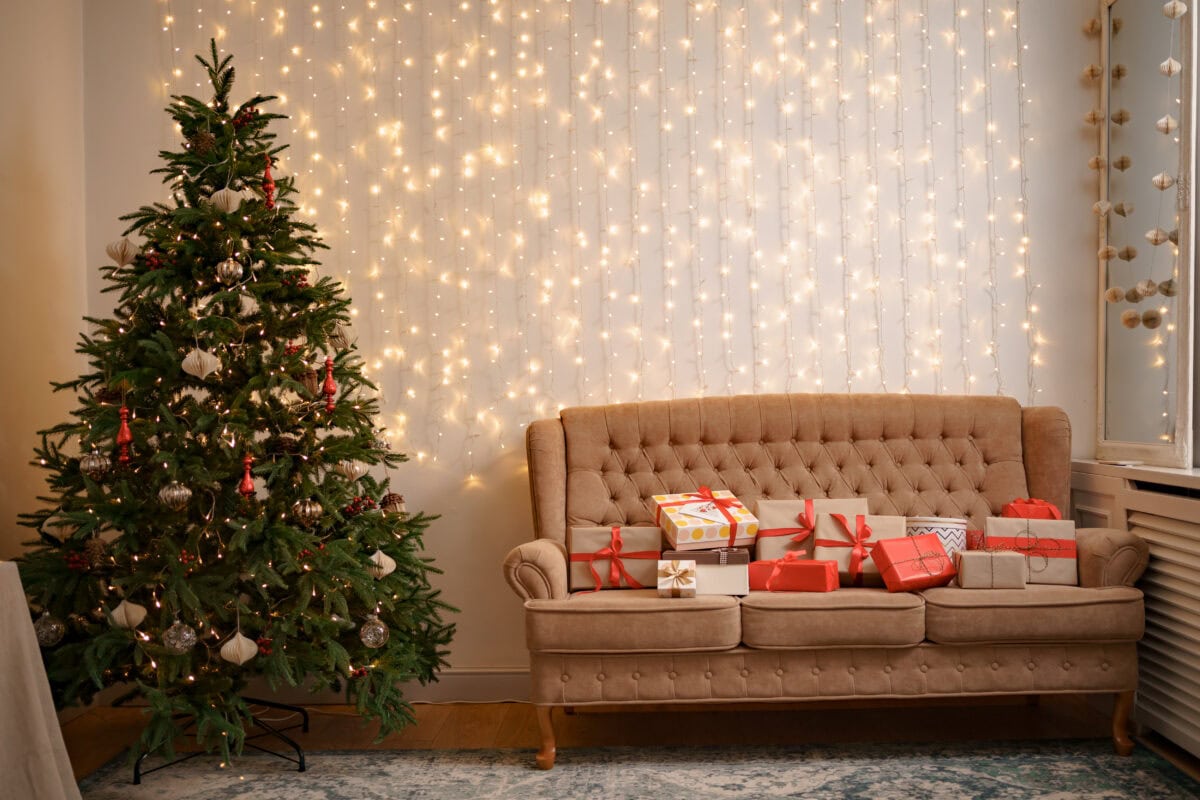
Rethinking the Christmas Tree: Living, Rental and Creative Alternatives
The Christmas tree is the centerpiece of most Christmas decorations and one of the most visible symbols of our environmental impact. Traditional cut Christmas trees, artificial trees, and newer living rental options each have different implications for a sustainable Christmas.
A living tree that is rented rather than cut can be a particularly powerful choice. The trees are cared for in a nursery for most of the year; we simply enjoy them for a few weeks, then return them to the forest setting. This model significantly reduces waste because the tree is not cut down and disposed of after one use. It is tended in pots, hand‑trimmed and fertilised, and when it outgrows its container, it can be planted to reach its full life span. Companies of this kind, alongside regional services such as The Living Christmas Company and platforms like Rentxmastree.com, show how a living Christmas tree can be turned into a long‑term asset rather than a disposable product.
When we prefer a cut tree, the choice of species also matters. A Noble Fir Christmas tree, for example, offers a classic shape and strong branches for Christmas Tree Ornaments, yet we still need to pay attention to sourcing from responsible growers and to using local recycling schemes. If we opt for an artificial tree, the key sustainable Christmas principle is longevity. An artificial tree, whether it imitates a Noble Fir or another species, is made from plastic and metal and incurs substantial environmental costs at manufacture. To reduce its environmental impact, we should commit to using that artificial tree for many years, storing it carefully and resisting the temptation to replace it with short‑lived trends. In this way, even an artificial tree can form part of a broader eco‑friendly Christmas strategy if we treat it as a long‑term investment rather than a fashion accessory.
We can also explore more imaginative, low‑impact alternatives. Some households create a Twigs and Branches Christmas Tree by arranging gathered branches against a wall or in a large vase, decorating them with Christmas Tree Ornaments made from natural materials. Others experiment with an Upcycled Glass Bottle Christmas Tree, stacking recycled bottles safely and lighting them with LED lights. These approaches eliminate the need for a conventional tree, reducing plastic waste and demonstrating that creative design can go hand in hand with Sustainable Christmas Decor.
Choosing Sustainable Christmas Decorations and Eco‑Conscious Baubles
The environmental impact of Christmas decorations extends far beyond the tree itself. Plastic Christmas decor, glitter‑coated objects and single‑use novelties all contribute to plastic pollution long after the holiday is over. A genuinely green Christmas calls for Sustainable Christmas Decoration Ideas that prioritise eco‑friendly, natural and recycled materials.
We can begin by favouring Sustainable Christmas Decor made from glass, metal, wood, or sustainable bamboo rather than conventional plastic. Eco‑conscious baubles such as Manimekala hand‑marbled papier‑mâché baubles, created from recycled paper, or Murrine recycled glass baubles, blown from reclaimed glass, offer a refined, artistic alternative to mass‑produced ornaments. These Christmas ornaments do more than decorate the tree; they tell a story about craftsmanship, upcycling and respect for resources. When we handle them carefully and store them well, they last for many years, further improving their environmental profile.
Textiles can also play a central role in sustainable decorations. A My Little Star Christmas stocking sewn from organic materials, such as organic cotton or linen, for instance, adds both sentiment and durability. A Velvet initial Christmas decoration hanging from the tree, made from high‑quality velvet and filled with recycled materials, offers a personal touch that can be enjoyed year after year. These types of Christmas Tree Ornaments look luxurious yet align with the principles of eco‑friendly Christmas design by avoiding cheap, disposable synthetics.
Around the table, we can replace single‑use novelties with Christmas cracker napkins that combine the fun of crackers with the practicality of washable napkins. Instead of traditional crackers packed with plastic toys that quickly become waste, fabric or paper napkins designed with a “cracker” format can hold small, thoughtful, low‑waste treats. This simple change prevents plastic waste from entering landfills while preserving the tradition many of us cherish.

Lighting the Season with LED Christmas Lights and Lower Emissions
Festive lighting is a major component of our seasonal energy use. Older incandescent strings consume significant electricity, while modern LED lights dramatically reduce this energy use and thus our environmental footprint. A core principle of eco‑friendly Christmas decor is, therefore, to replace outdated bulbs with LED Christmas Lights wherever possible.
LED lights use far less energy than traditional bulbs for the same level of brightness and have a much longer lifespan. When we wrap LED lights around a Noble Fir Christmas tree or frame windows and stair rails with LED string lights, we enjoy the same warm glow while reducing carbon emissions associated with electricity generation. For exterior displays, solar‑powered LED units can further reduce grid demand. We also benefit from employing timers or smart plugs so that our lights are on only when they will truly be appreciated. This not only supports a zero-waste mindset by avoiding wasted energy but also contributes to a calmer, more intentional atmosphere within the home.
By seeing Christmas decor through the lens of environmental science, we can quantify the difference: multiple strings of old incandescent bulbs running for many hours per night can multiply our seasonal energy footprint, whereas a carefully chosen arrangement of LEDs focused on key focal points keeps our environmental impact modest while retaining the enchantment we seek.
Embracing DIY Decorations, Natural Materials and Recycled Materials
One of the most effective ways to reduce plastic waste and pollution from Christmas decorations is to embrace DIY decorations made from natural, recyclable, and recycled materials. Hand‑crafted pieces carry emotional value, encourage creativity and help us avoid impulse purchases of low‑quality items.
We might, for instance, create garlands from dried orange slices, cinnamon sticks and pinecones, threaded onto natural twine. Such sustainable decorations look beautiful around door frames, over mantels or across a Twigs and Branches Christmas Tree, and at the end of the season, they can be composted, contributing to a zero-waste approach. Similarly, paper stars and chains made from old magazines or recycled paper reduce the demand for new materials and offer a gentle, nostalgic aesthetic. Simple changes, like using sustainable bamboo for tableware, stirrers, or ornament frames, further replace plastic Christmas decor with biodegradable or renewable options.
At a more advanced level, upcycled projects enable us to transform existing items into entirely new pieces of Christmas decor. An Upcycled Glass Bottle Christmas Tree, for example, gathers bottles that might otherwise go to recycling and turns them into a sculptural focal point, lit from within by LED lights. Old glass jars can become lanterns or miniature winter scenes, filled with small twigs, moss and eco‑conscious baubles. By devoting an afternoon to making DIY decorations as a family, we create memories and beautiful Sustainable Christmas Decoration Ideas, reducing the need to purchase more goods and reinforcing a culture of reuse.
Reducing Waste Beyond Decor: Christmas Presents and Food Waste
A holistic view of sustainable Christmas decor also requires us to look beyond the tree and ornaments to our consumption patterns, especially Christmas presents and food. We know that the holiday season is associated with significant food waste, from uneaten leftovers to over‑purchased party snacks. By planning menus realistically, storing food correctly and repurposing leftovers in creative recipes, we can substantially reduce this aspect of our environmental impact. Thoughtful labels, clearly organised fridges and freezers, and a commitment to using what we buy are therefore as much a part of a green Christmas as the decorations themselves.
When it comes to Christmas presents, eco‑friendly Christmas gift ideas align seamlessly with decor choices. Experience‑based gifts, high‑quality items made from eco‑friendly materials, or products from local artisans all reflect a sustainable Christmas ethos. The way we wrap these gifts matters as well. Recycled materials, such as plain kraft paper, fabric wraps, and reusable boxes and tins, help us avoid shiny, laminated paper that cannot be recycled. A beautifully tied fabric wrap that matches our My Little Star Christmas stocking or coordinates with our Velvet initial Christmas decoration extends the visual theme of our sustainable Christmas decor right down to the base of the tree.
We can also participate in a Christmas decor swap with friends or neighbours, trading ornaments, garlands and even small trees that are no longer needed in one home but may be cherished in another. This approach prevents usable Christmas Decorations from being discarded and gives us a refreshed look without new production. When combined with living rental trees from services like Rentxmastree.com or other regional providers, decor swaps, and mindful shopping, we move closer to a genuinely zero-waste festive season.

Building a Coherent, Sustainable Christmas Aesthetic
The most successful sustainable Christmas decor is not an assortment of random “green” products but a coherent aesthetic that flows naturally through the home. We might choose a palette dominated by forest greens, soft whites, natural wood tones, and gentle metallic accents, using eco‑conscious baubles, organic materials, and sustainable bamboo to reinforce this scheme. Velvet, linen and wool create a rich sensory environment, whether in a Velvet initial Christmas decoration on the tree or in cushions and throws arranged around the living room.
By consistently preferring eco‑friendly materials, Natural materials and recycled materials over plastic Christmas decor, we convey a clear visual message: sustainability can be luxurious, modern and deeply comforting. A Noble Fir Christmas tree decorated with Murrine recycled glass baubles and Manimekala hand‑marbled papier‑mâché baubles, lit by warm LED Christmas Lights and surrounded by zero-waste Christmas cracker napkins and thoughtfully wrapped gifts, becomes a symbol of how a green Christmas can be both beautiful and responsible. Our choices reduce our environmental footprint and, at the same time, offer a richer sense of connection to craft, nature, and each other.